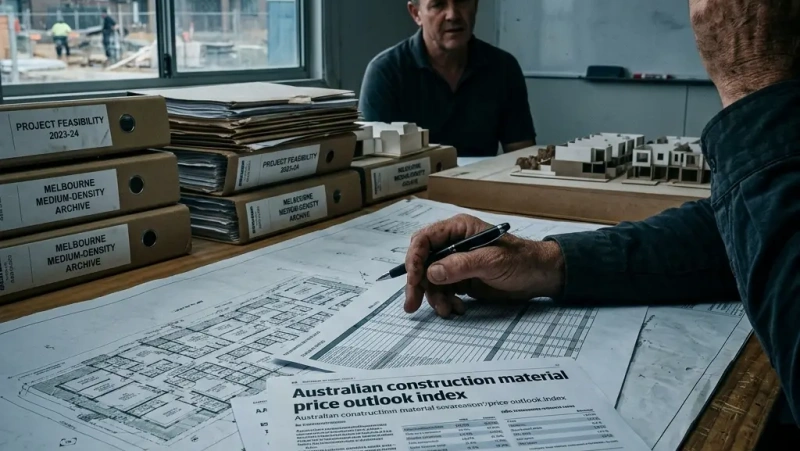
When architects oversee DA approvals, they create conflicts of interest that cost developers time and money. The person designing a building shouldn’t also be the one negotiating its approval with the Council. Developers who act as applicants themselves gain direct control over costs and benefits, avoid emotional conflicts, and prevent costly delays caused by misaligned incentives.
I was busy at work, organising a renovation on my own property. I had always handled DA approvals myself. But this time, I thought: how hard could it be? I’ll let the architect do it.
Core Answer:
- Architects who oversee DA approvals encounter two common pitfalls: emotionally battling for design purity, which causes delays, or safeguarding their Council relationships, thereby leaving value on the table.
- The individual responsible for creating compliance issues shouldn’t handle the negotiations. A clear separation of duties helps prevent this conflict.
- Developers who apply quickly evaluate the financial impact because they understand their numbers, timeline, and what is worth fighting for.
- There’s no time or cost penalty for acting as your own applicant. You inform consultants early and manage the Council relationship directly.
- A three-month architect-driven delay doesn’t just incur holding fees. It also leads to downstream issues such as missed market opportunities, which can result in over 12 months’ worth of additional costs.
How I Spent 15 Months Dealing with an Architect’s Ego
Three months on, my phone rang.
The council was calling. The planner told me they were having serious trouble with my architect. Three issues were holding up my approval. I listened. All of them were reasonable requests. I agreed to everything straight away.
When I rang my architect, he started yelling. The council wanted to spoil his design. They could refuse it, and we’d contest it in court. I’d cover the court costs.
Three months of delays I wasn’t aware were occurring.
Bottom line: I learnt the hard way that giving control to your architect creates accountability gaps you don’t notice forming until they become costly.
What Is the Structural Issue with Architect-Controlled Approvals?
My architect designed outside the building envelope. He created the compliance problem himself. Then he spent three months defending his mistake as “architectural merit” while I paid holding costs I didn’t realise I was wasting.
The council wasn’t the enemy. They had a job to do.
My architect became emotional. Design professionals face an inherent conflict when they serve as both designer and contract administrator. They owe duties to their client while needing to manage the contract impartially.
The core issue goes beyond just one emotional architect.
The person who causes the problem shouldn’t be the one to negotiate the solution.
This is basic risk management. Separation of duties exists because giving a single individual complete control of a process exposes an organisation to risk. No employee should be in a position both to perpetrate and to conceal errors in the normal course of their duties.
Yet in property development, we delegate this control to architects every day.
Key insight: When the same individual designs the building and handles its approval, there is no independent check to verify if design ambitions match regulatory requirements or financial limits.
What Is the Real Cost of an Architect-Driven Delay?
I got my approval a few days after that phone call. The damage was already done.
When we listed the property for sale, the Gulf War had already started. Nobody was buying due to the uncertainty. If I had listed three months earlier, we would have sold and moved on to the next project.
Instead, I kept the property for another 12 months, waiting for the market to recover.
Fifteen months of holding costs because my architect battled the Council over a design issue he caused.
For a development site bought with a $600,000 loan at current interest rates, holding costs include monthly interest payments of $2,500 to $3,500, council rates of $200 to $400, land tax, insurance of $100 to $200, and site maintenance of $200 to $500. Each month beyond the expected timelines adds $3,500 to $5,000 in unbudgeted holding costs.
Three months amounts to $10,500 to $15,000. Fifteen months amounts to $52,500 to $75,000.
The visible cost is one thing. The unseen cost is the opportunity I missed because my capital was tied up in a property I couldn’t sell.
The maths: A three-month delay doesn’t mean three months of fees. When you miss your market window, you pay for the delay and the longer holding period until conditions get better.
Why Do Architects Fail at Managing DA Approvals?
This occurs due to the way we organise the DA approval process.
Architects design buildings, which is their training and expertise. When they also act as the applicant for DA approval, they are stepping outside their specialised field.
They have two ways of failing.
Failure Mode One: The Emotional Fighter
This was my architect. He had no ongoing ties with my local council to defend. He could afford to contest because the cost was mine, not his. When the Council pushed back on his non-compliant design, he defended it with professional pride.
Emotion doesn’t cut it with authorities. They couldn’t care less about your renovation. They’ve got a job to do.
Failure Mode Two: The Relationship Protector
The opposite issue is more typical. Architects and town planners who frequently work in a region prefer not to upset authorities by challenging or pushing for things that may be beneficial but aren’t explicitly compliant.
They protect their ongoing relationship with Council instead of fighting for your project.
In both cases, the developer’s interests aren’t being served. In the first case, you pay for unnecessary conflict. In the second case, you leave value on the table because your consultant won’t push hard enough.
The pattern: Architects focus on their design vision or professional relationships. Developers require someone prioritising financial outcomes.
Why Do Developers Keep Repeating This Mistake?
Inexperienced developers fear Council, thinking an architect or town planner would do better because these professionals regularly deal with Council.
Dealing with Council regularly doesn’t mean they understand your financial situation.
Who better to look after your financial interests than you?
When you’re the applicant and the Council asks for changes, you assess the financial impact immediately. You know your budget. You know your timeline. You know what you can give up and what you need to stand firm on.
Your architect isn’t aware of any of this. Your town planner isn’t either.
I’ve seen this happen across hundreds of projects. Once, I watched a development manager stand in his suit at an on-site court hearing, miles from the architects, town planners, and traffic consultants who were speaking to the court. He was more concerned with how he looked than the outcome.
Applying for the role can work against you if you don’t understand what it requires.
What’s required: You don’t need technical expertise. You just need financial clarity and the ability to make cost-benefit decisions on the spot.
What Are the Industry-Wide Costs of DA Delays?
The construction industry has become so accustomed to delays that we often overlook how costly they can be.
In North America, 98% of construction projects encounter delays, extending the duration of work by an average of 37%. For an average project delay of 30 percent, the typical cost of delay is $15 million.
According to a KPMG report, only 25% of construction projects finish within 10% of their original deadlines. On average, 74% of projects face delays.
We’ve accepted this as normal. Most of these delays begin at the DA stage, where the structure is set wrong from the start.
The beginning contains the ending.
Poor structure at inception becomes an irreversible cost downstream. When your architect designs outside the building envelope and then fights Council over the problem, you’re not paying for three months of delay. You’re paying for every downstream consequence of the delay.
Why this matters: Get it right initially, or face much higher costs later. The cheapest insurance is correct at the start.
What Happens When the Developer Is the Applicant?
When you engage your consultants, let them know you’ll be the applicant.
There’s no time penalty. No extra cost.
What changes is accountability. Everything becomes outcome-focused. You’re seeking approval and assessing the financial impact of any decision in real time.
When the Council says they want you to move the upper level back from the boundary, you don’t need to check with anyone if that’s okay. You know your figures. You know whether the change will kill the project or cut your margin by 2%.
It’s your call.
Your architect can’t decide. He doesn’t know your cost of capital. He doesn’t know what you paid for the site. He doesn’t know your exit strategy or your timeline.
There’s less conflict over design and compliance issues when the developer is the applicant.
The council engages with the individual who has a financial stake in the matter. They are not dealing with someone just defending their design or safeguarding their relationship with other councils.
The discussion becomes more practical rather than emotional.
The shift: Council contacts you directly when problems come up. You find out about issues when they’re still manageable. You make decisions based on your financial reality, not someone else’s professional pride.
How Does the Independent Agent Model Operate?
In every project I undertake now, I’m the applicant. No exceptions.
Even when I’m the consultant, I assume this role because I recognise the strategic importance of managing the relationship with Council.
My decision framework is straightforward: is the effort of the battle justified?
There’s no point fighting unless there’s a worthwhile benefit. Sometimes I’m happy to take on multiple challenges to win a few. Every action needs a plan.
I’ve been in situations where my planner said 5 storeys, maybe 7. I told the Council 10, and they accepted.
Our consultants aren’t always correct. We need to listen to their advice and carefully consider the cost-benefit before acting. Only the developer can make this call.
How could it be appropriate to have an architect or town planner as the applicant when they can’t perform this calculation?
The framework: Your consultants deliver technical expertise, while you offer financial judgment and strategic direction. These are distinct functions that require a clear separation of duties.
Why Does the Industry Resist These Changes?
Having the architect or town planner manage DA approvals is common. Everyone does this because it’s easier than trying to navigate Council on your own.
Convenience during project setup can lead to higher costs at project completion.
Some seasoned developers can be lazy. Some fear the Council. Both groups convince themselves that professionals would handle it better.
The truth is straightforward. It’s your money at stake.
Consider whether the architect or town planner understands your financial situation. Ask if they can make the right decisions for you.
They can’t. 100% they’re not capable of doing so.
The resistance: Change involves taking responsibility. Handing control to consultants seems safer because you can blame them if things go wrong. Taking control means accepting accountability.
What Does This Look Like in Practice?
As the applicant, you’re not responsible for the technical work. Your architect continues to design. Your town planner still prepares the planning report. Your traffic consultant still conducts the traffic study.
The changes involve who signs the application and who the Council contacts when they have questions.
They contact you. You learn about issues while they’re still minor. You make choices based on your financial circumstances, not someone else’s professional ego or relationship concerns.
You manage the timeline. You determine the strategy. You oversee the cost-benefit analysis of each decision.
This is about risk management, not micromanagement.
The National Society of Professional Engineers recommends that peer reviewers should not be employees, colleagues, partners, or subconsultants of the professional engineer whose design is being peer reviewed. They must be contracted directly by the project owner, not the engineer of record.
This is common practice in engineering. The same principle should be followed in development.
Implementation steps:
- Inform consultants upfront that you’ll be the applicant when engaging them.
- Make sure all DA correspondence is sent to you, not your architect.
- Attend key meetings with the Council personally or make sure your representative is aware of your financial thresholds.
- Make cost-benefit calls instantly based on your project figures.
- Use consultants for technical expertise, not for strategic or financial advice.
What decision do you need to make?
I never received the bill my architect threatened to send. I got my approval and never spoke to him again.
I’ve learnt something that has influenced every project since. The person designing the solution shouldn’t control its approval. The person with financial skin in the game should control the relationship with the authority granting permission.
This isn’t complicated. It’s simply about the basic separation of duties.
The question is whether you’re prepared to take responsibility for your own approvals or if you’ll continue handing control to people who don’t understand your financial situation and can’t make the cost-benefit decisions that determine whether your project succeeds or fails.
Your architect can create a beautiful building. Your town planner can prepare a compliant planning report.
Only you can decide whether a three-month fight with the Council over architectural merit is worth 15 months of holding costs and a missed market window.
I look after my money. You should look after yours.
Frequently Asked Questions
Do I need technical knowledge to apply as a DA?
No. Your consultants offer technical expertise. You provide financial judgment. When Council asks for changes, you evaluate whether those changes fit your budget and timeline. Your architect manages design. Your planner handles compliance documentation. You make strategic decisions about what is worth fighting for.
Wouldn’t being the applicant add time to my project?
No. There’s no time penalty. You inform your consultants upfront that you’ll be the applicant. They prepare the same technical documents. The difference is that the Council calls you instead of your architect when issues arise. This typically speeds things up because you make financial decisions faster than consultants protecting design visions or Council relationships.
What should I do if my architect refuses to work with me as the applicant?
Find a different architect. Any architect who insists on controlling the DA approval process is indicating they prioritise control over your financial interests. Good consultants understand their role is to provide technical expertise, not to make your strategic decisions.
How can I tell when to accept Council’s requirements instead of challenging them?
Run the numbers. If Council wants you to reduce density from 12 units to 10 units, work out the financial impact. If the reduction costs you $200,000 in revenue and fighting would delay the project by three months at $15,000 in holding costs, the math is clear. Accept the reduction. If the reduction destroys project viability, fight. Only you know these numbers.
What’s the difference between being the nominal applicant and truly controlling the process?
Being the nominal applicant means your name appears on the forms. Controlling the process involves the Council calling you directly, attending key meetings, making real-time decisions about trade-offs, and setting the strategy for what to pursue and what to accept. Both are important, but the second is where the true value lies.
Can I hire someone to act as the independent agent if I don’t want to do it myself?
Yes. Hire someone who understands your financial situation and has the authority to make cost-benefit decisions aligned with your interests. This person shouldn’t be your architect or town planner. They should be someone whose only job is to navigate the approval process based on your financial thresholds and strategic goals.
What if I’m an inexperienced developer and don’t know how to handle the Council?
You’ll learn more by doing it yourself than by handing control over to someone else. Council planners are professionals doing their job. They’re not your enemy. Be respectful, be prepared, and focus on outcomes. When they ask for changes, evaluate the financial impact and respond with your numbers. Experience comes from making these decisions, not from avoiding them.
How common is it for architects to create compliance problems, then fight over them?
More common than you might think. Architects focus on their design vision. When their designs don’t meet planning codes, some fight to keep the original design instead of making adjustments. Others won’t fight at all, prioritising their relationships with the Council. Both approaches can cost developers money. The solution remains the same: separate the design process from the approval process.
Key Takeaways
- The person causing compliance issues shouldn’t oversee the approval process. Basic separation of duties stops architects from arguing with the Council over their own design errors while holding costs accumulate.
- Architects face two failure modes: reacting emotionally, which causes delays, or safeguarding Council relationships, which results in missed opportunities. Neither benefits your financial interests.
- Developers acting as applicants make quick cost-benefit choices because they are aware of their budget, timeline, and what is worth arguing over. Consultants are unable to make these calculations.
- There is no time or cost penalty for being your own applicant. Inform consultants upfront, sign the application yourself, and make sure Council contacts you directly.
- A three-month delay doesn’t mean just three months of fees. When you miss your market window, you end up paying for both the delay and the extra holding period. In my case, three months stretched to fifteen months.
- Establish the correct foundation from the start, or face much greater costs later. The structure you set during the DA phase decides whether issues escalate or are identified early.
- Your consultants offer technical expertise, while you offer financial judgment and strategic guidance. These are distinct functions that require clear separation of control.
About the Author
Steve Chandler is a third-generation property developer with over 40 years of practical experience in residential, commercial, industrial, medical, infrastructure, and public building projects throughout Australia.
As CEO of LEFTA Group of Companies, Steve specialises in property development advisory, consultancy, strategy, and training, with particular expertise in residential projects ranging from 30 to 80 apartments.
Professional Experience
Steve’s career started in 1980, giving him four decades of hands-on involvement in all aspects of property development. His experience covers:
- Project feasibility study and risk evaluation
- Development strategy and implementation
- Contract negotiation and project recovery
- Regulatory compliance and approval from authorities
- Budget management and cost control
Throughout his career, Steve has established a systematic method for spotting structural weaknesses in project setup stages, helping to prevent cost blowouts before they happen.
Teaching and Knowledge Sharing
Steve has shared his expertise as a lecturer at Property Development Institute, teaching property development principles to aspiring developers. He authored “From Building Worrier to Building Warrior: Taking The Worry Out Of Building” (available on Amazon), which documents research into renovation loan patterns and budget management strategies.
His teaching philosophy focuses on turning theoretical knowledge into practical, actionable strategies that avoid common development failures.
Specialisation and Methodology
Steve’s approach to property development highlights:
- Conduct thorough research upfront before acquiring property.
- Comprehensive feasibility assessments covering 15-20 cost categories
- Choose risk relocation instead of risk avoidance
- Complete project documentation to prevent scope creep.
- Strategic contract structuring with protective special conditions
His methodology relies on pattern recognition from decades of observing what distinguishes successful projects (22% that stay on budget) from failed ones (78% that experience cost overruns).
Industry Acknowledgement
Steve’s expertise is highly valued by property developers tackling complex, high-stakes projects where standard methods fall short. His work concentrates on:
- Preventing budget blowouts through intervention during the setup phase
- Revitalising struggling projects through strategic restructuring
- Guiding developers in conducting professional-grade feasibility analyses
- Engineering project conditions where success is maximised
Geographic Focus
Based in Australia, Steve’s expertise is rooted in the Australian property development scene, including regulatory rules, standard building contracts (Australian Standards, Master Builders Association, Housing Industry Association), and Australian tax considerations for property development.
Contact Details and Additional Information
Steve Chandler works with property developers through LEFTA Group of Companies, offering strategic advice, project consultation, and professional mentorship for those dedicated to approaching property development as a profession rather than speculation.
His insights are shaped by hands-on involvement in hundreds of projects across residential, commercial, and mixed-use developments, along with research into industry-wide trends of success and failure.
Conflict-of-Interest & Commercial Disclosure: LEFTA Corporation Pty Ltd advises clients across Australia and may seek future joint-venture opportunities at some of the sites discussed. Views expressed are personal and do not represent any current client mandate.
General Advice Disclaimer: This article is based upon the personal experiences of the Author. No portion of this article is intended to provide legal, financial or professional advice. The information contained herein is not a substitute or replacement for the services of qualified professionals, legal, financial and insurance experts. The Author, its publisher, agents, servants, contractors, employees and representatives will, under no circumstances, be liable for any special or consequential damages that result from the use of, or any attempt to use, the information contained herein. You are solely responsible and accountable for any actions, decisions and results by your use of the information contained herein. You agree not to attempt to hold the Author and LEFTA Corporation Pty Ltd liable for any such decisions, actions or results, at any time, under any circumstances.