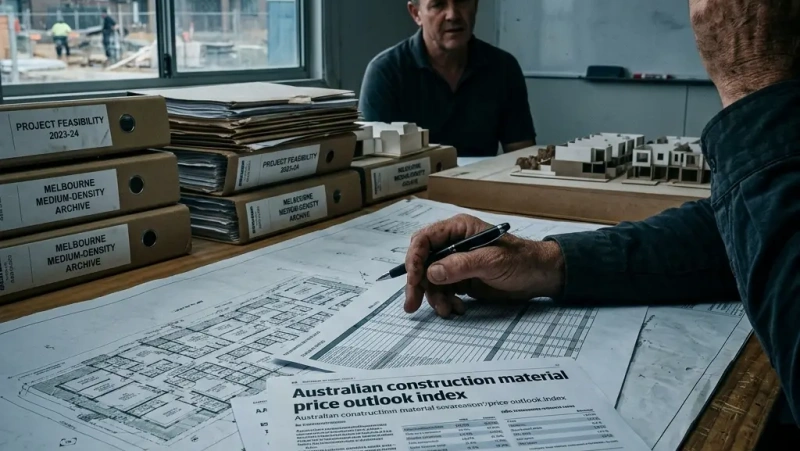

Property development projects fail without proper written plans. After 40 years in the industry, I’ve observed that 75% of developers submit inadequate documentation, resulting in cost overruns averaging 28%. Written project plans foster accountability, prevent cost blowouts, and separate profitable developers from those who fail. The discipline of documentation isn’t bureaucracy. It’s essential for survival.
Why written project plans are essential:
- Construction projects without proper planning exceed budgets by at least 16%, with 85% experiencing cost overruns.
- High-performing organisations with documented project management practices achieve their goals 2.5 times more frequently (89% vs 34%).
- The leading cause of project failure is poor project definition at the start.
- Developers who use their own money face the greatest risk: lack of accountability.
- Professional-standard documentation significantly reduces time during authority assessment periods.
Twenty years ago, I wrecked one of my own projects.
Not due to bad luck. Not because of market conditions. But because of arrogance.
I had the training and 20 years of experience by then. I knew better. Because the money was mine, I convinced myself I didn’t need to follow the same discipline I expected from everyone else.
The decision caused me weeks of delays and thousands of dollars in costs.
More importantly, the experience taught me the most dangerous truth in property development: when you answer for someone else’s money, you’re obligated to protect the investment. When the money is yours, there’s no obligation. Nobody tells you what to do.
That freedom can consume you.
What Happens When You Skip the Written Plan
I created a project schedule and reviewed micro-schedules for specific activities. However, I failed to monitor the overall timeline and address delays as they accumulated.
I lost track of the overall picture.
The first symptom was timeline creep. I was simultaneously launching my consultancy business, chasing clients, and creating cash flow. The divided focus pulled me away from maintaining my overall project schedule.
Then the design shortcuts began.
We’ll sort this out during the build.
I said the phrase dozens of times. Each time, I avoided the work of completing proper design when I was already behind schedule. I convinced myself my experience would compensate for incomplete documentation. I was the developer and the builder. Surely I could manage design issues as they arose.
Incorrect.
The incomplete design documentation resulted in poor cost planning. Timeline delays led to a significant cost blowout during construction.
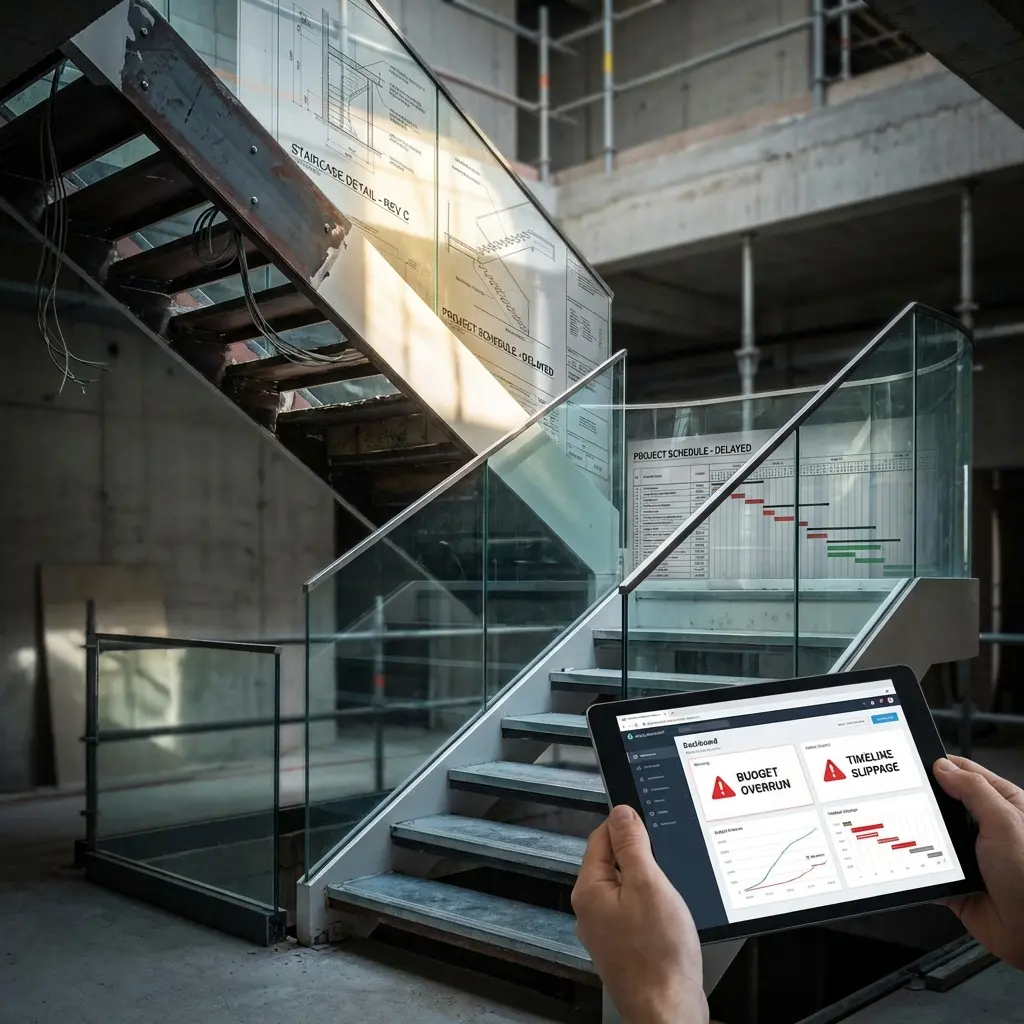
The three-storey glazed winding staircase
Instead of clearly outlining how this feature would be built from the start, I spent weeks going back and forth with various contractors, trying to work out how to create what I needed.
The indecision didn’t delay any element. The work blocked access to other areas and lengthened the whole construction timeline.
Weeks of delay. Thousands of dollars in extra costs.
The cause? I didn’t allocate enough time for proper documentation before starting construction.
The lesson: Experience can’t replace proper documentation. Informal planning leads to delays and cost overruns, especially when juggling multiple roles on the same project.
Why 75% of Development Applications Are Insufficient
A General Manager from one of my local authority clients shared an insight that changed my understanding of the development industry.
They told me that 25% of the development applications they receive are high-standard and professional, while the remaining 75% are rubbish.
The 25% come from large-scale property developers who engage professional consultants. These teams know what reports are needed to facilitate project assessments.
The 75% are developers trying to cut corners. They submit incomplete or rushed reports to save on preparation costs while ticking boxes to claim they meet minimum requirements.
The Illusion of Saving by Cutting Corners
Research confirms what I’ve seen: construction projects typically go over budget by at least 16%, with 85% experiencing cost overruns, and the average overrun reaching 28%.
These statistics are derived from several comprehensive studies, including Propeller Aero’s analysis of construction project data and Bent Flyvbjerg’s research on large infrastructure projects, which revealed that 90% of projects exceed their budgets with an average overrun of 28%.
What occurs when you submit subpar documentation
When developers submit poor documentation, the assessment period lengthens. The authority notifies them of the issues. They then discuss what is needed. Updated reports must be prepared, submitted, and reviewed again.
Here’s a typical situation: A local council gets an application for development on a road owned by the state government. The state road authority needs to review the traffic report as part of the assessment.
If the initial traffic report is unsuitable, the discovery process takes 6 to 8 months from submission.
The clock stops while the developer is advised, during dialogue, and while the report is amended. Afterwards, the revised report is sent back to the road authority at the bottom of the pile.
Time equals money in property development.
While minimal capital is outlaid at the start of a project, holding costs build up. Market risk also factors in.
Real example: 1,000-apartment development
I submitted a development application for over 1,000 apartments, which took more than two years to get approval. During that period, the residential property market downturn made the project unviable. Instead, a commercial office development was built on the site.
Two years of market exposure due to the prolonged approval process.
The reality: Skimping on documentation doesn’t save money. The approach lengthens assessment timeframes, raises holding costs, and leaves projects vulnerable to market risk. Professional-standard submissions progress more quickly and safeguard project viability.
What a Genuine Project Plan Includes
I employ a pro forma project plan and a pro forma project report for each project. Everything I do is compared against these documents.
Every part is non-negotiable.
You can’t be half pregnant. The same logic applies to everything we do in property development.
Five essential statuses to monitor:
- Programme status – Has the project been delayed or sped up?
- Authority approvals status – How are we progressing with regulatory compliance?
- Project financial status – Have costs risen or fallen?
- KPI status – Are we hitting performance benchmarks?
- Sales and marketing status – Have revenues gone up or down?
I check the status of each component of a project.
Here’s the insight: if everything is going smoothly in all areas, the report is unreliable.
Nothing ever goes exactly to plan. A report claiming everything is good is pointless.
My approach to mentoring developers
When I mentor developers now, I require them to prepare a project plan, an overall project schedule, and submit a project report to me each month, as if the money were mine. Then I question them on the content.
I focus on three particular issues:
Time. Has the project been delayed or sped up?
Cost. Have costs gone up or down?
Revenue. Have revenues gone up or down?
Whatever has occurred, I ask, “Why?”
If I believe something should have been affected but the report doesn’t show impact on any of the three metrics, I focus on why.
This is where I spot problems before they turn into disasters.
What matters: A genuine project plan monitors every component with honest variance reporting. If everything appears flawless, the report is useless. Problems occur in every project. The key is whether you’re identifying them early or allowing them to grow.
How to Avoid Authority Rejection
I’ve never faced rejection for a development application in my 40-year career.
Not once.
This isn’t chance. It’s a system.
The system: Exceed minimum requirements
All authorities set minimum standards for lodging development applications. Most developers see these as their upper limit. I choose to do the opposite.
I never set the published minimums as my maximum.
When I provide the required reports, I don’t submit underwhelming ones. I deliver reports of professional standard.
Where we are aware of risks, I don’t conceal them. I openly disclose these risks and offer further detail on why these areas are being properly managed throughout our development application documentation.
After submission, I follow a standardised communication approach to stay in touch with the authority and gather initial feedback.
Real example: Investing in documentation pays off.
On one project, my manager accused me of overspending on development application documentation. When I received approval in what they believed was a record timeframe, they were delighted.
That’s why, I said.
I didn’t mention my personal communications strategy.
The evidence backs this method.
The upfront investment in professional-standard documentation saves a lot of time during assessment periods. According to PMI’s Pulse of the Profession research, high-performing organisations with proven project management practices achieve their original goals 2.5 times more often (89% versus 34%) and waste 13 times less money than their low-performing counterparts.
That’s not just a small upgrade. It’s the difference between effective project management and always battling fires.
The approach: Surpass published minimums, disclose risks early along with solutions, and keep proactive communication with authorities. Professional-quality documentation shortens assessment times and safeguards approval outcomes.
Why Experienced Developers Resist Written Plans
Why do seasoned developers (people who know better) repeatedly resist creating formal, written project plans?
The answer is straightforward.
When you answer for someone else’s money, you’re responsible for protecting the investment. When the money is yours, there’s no such obligation.
This psychological dynamic creates the most risky situation in property development. Freedom from accountability seems like empowerment. The feeling leads to failure.
I learned this lesson through my own failure. Now, when I require mentees to report monthly “as if the money were mine,” I’m creating artificial accountability to impose discipline they wouldn’t otherwise enforce on themselves.
The evidence backs this method.
A PMI survey of 70 professional engineers asked them to rate 70 potential reasons for project failure. The top-rated reason was “the project was not adequately defined at the beginning,” while the third most common reason was “a lack of clearly defined project goals and objectives.”
These aren’t minor oversights. They’re core failures originating from the same psychological resistance I faced two decades ago.
The psychology: Using your own money removes accountability, creating risky freedom. Experienced developers persuade themselves they don’t need the discipline they’d demand from others. This resistance to formal planning leads to most project failures.
How Disciplined Planning Drives Profit
Disciplined planning with proper documentation doesn’t prevent disasters.
The approach generates profit.
If you’re not losing money, you’re making money.
In the 30 to 80 apartment development sector where I specialise, this discipline sets apart successful developers from those who fail.
Documentation prior to construction
When I advise clients to use a Design and Construct building contract, I also recommend they include sufficient specifics about their needs. For anything requiring construction in a particular way, provide detailed information to ensure you get what you envisage.
This isn’t about controlling every detail. The focus is on documenting decisions before construction starts, when changes are inexpensive.
My three-story glazed winding staircase taught me this lesson the costly way. Proper upfront documentation would have cost a fraction of what I spent going back and forth with different contractors during construction.
The approach to Design and Construct contracts
Complete all essential designs before progressing. I believe in the Design and Construct form of building contract, with professional builders who are not financially invested in the property development project.
The division of roles fosters accountability. Documentation promotes clarity. Together, they shield the project from shortcuts that may seem quick but undermine value.
The advantage: Disciplined planning with full upfront documentation prevents cost blowouts and generates profit. Record decisions when changes are inexpensive, not during construction when modifications increase costs and delays.
Prior Preparation and Planning Prevents Poor Performance.
In the film Forrest Gump, Forrest repeats what his mum used to say: “Life is like a box of chocolates, you never know what you’re going to get next.”
The statement applies to life.
It’s incorrect regarding property development.
We know precisely what we’ll receive if we adhere to the six P’s of project management.
Prior Preparation and Planning Prevents Poor Performance.
This isn’t an acronym. It’s the fundamental truth that separates successful developers from those who fail.
Follow the property development process, and you give your project the best chance of success.
Skip the written plan, and you’re not being agile or trusting your gut.
You’re on a path to fail.
What I learned from my mistakes
I learned this lesson through my own money, my own mistakes, and my own painful education. The glazed staircase, costing me weeks and thousands of dollars, taught me more than any textbook.
Now I require every developer I mentor to prepare comprehensive project plans, maintain overall project schedules, and provide monthly reports as if the money were mine.
The discipline of documentation isn’t just bureaucracy. It’s survival.
In property development, the difference between disciplined planning and informal shortcuts is a matter of profit or loss.
That’s not just theory. That’s 40 years of experience speaking.
The principle: Property development outcomes are predictable when you follow disciplined processes. Prior Preparation and Planning Prevents Poor Performance. Skip the written plan, and you’re not being flexible. You’re guaranteeing failure.
Frequently Asked Questions
What is the main reason property development projects often fail?
A PMI survey of 70 professional engineers found that the main reason for project failure is “the project was not adequately defined at the beginning.” Without formal written documentation, projects lack clear direction, scope boundaries, and accountability mechanisms. The result is timeline creep, cost overruns, and ultimately project failure.
How much do construction projects usually go over their budgets?
Construction projects typically go over budget by at least 16%, with 85% experiencing cost overruns. The overall average excess reaches 28%. These figures are based on detailed studies, including Propeller Aero’s analysis and Bent Flyvbjerg’s research on large infrastructure projects, which found that 90% of projects exceed their budgets.
Why do seasoned developers ignore formal planning when they understand its importance?
The psychology is simple: when you’re responsible for someone else’s money, you’re obliged to protect the investment. When the money is yours, there’s no such obligation. This sense of freedom from accountability feels like empowerment, but it creates the most dangerous situation in property development. Experienced developers convince themselves they don’t need the discipline they’d demand from others.
What should a genuine property development project plan include?
A genuine project plan monitors five key statuses: programme status (delays or acceleration), authority approvals status (regulatory compliance), project financial status (cost variations), KPI status (performance benchmarks), and sales and marketing status (revenue fluctuations). The plan must incorporate honest variance reporting because if everything appears perfect, the report loses its value.
How does professional documentation influence development application approval times?
High-quality documentation greatly shortens assessment times. When developers submit poor documentation, the assessment process can be delayed by months as authorities identify issues, engage in discussions, and require revised reports for review. In my 40 years, I’ve never been rejected for a development application because I meet minimum standards, disclose risks early, and stay proactive in communication.
What is the competitive advantage of disciplined planning in property development?
According to PMI’s Pulse of the Profession research, high-performing organisations with proven project management practices meet their original goals 2.5 times more often (89% versus 34%) and waste 13 times less money than their low-performing counterparts. Disciplined planning doesn’t help you avoid disasters. The approach creates profit because if you’re not losing money, you’re making money.
When should design decisions be documented in a property development project?
Document all decisions before construction begins, especially when changes are inexpensive. Making design adjustments during construction causes weeks of delays, thousands of dollars in extra costs, and a chain of problems that impact other parts of the project. Finalise all essential designs beforehand to prevent shortcuts, maintain efficiency, and preserve value.
What percentage of development applications are considered inadequate?
A General Manager from a local authority states that 75% of development applications are inadequate. These applications are often submitted by developers trying to save money by providing incomplete or underdone reports, simply ticking boxes to meet minimum requirements. This false economy ends up increasing assessment times and puts projects at market risk.
About the Author
Steve Chandler is a third-generation property developer with over 40 years of practical experience in the construction and property development industry.
Professional Experience
Since starting his career in 1980, Steve has been involved in a wide range of projects including residential, commercial, industrial, medical, infrastructure, and public buildings. Over four decades, he has realised that residential development—particularly projects with 30 to 80 apartments—is his area of expertise.
Steve has held the position of:
- CEO of his own property development firm
- Lecturer at UNSW University from 2012 to 2021, teaching property development.
- Property development strategist and consultant
Expertise and Approach
Steve specialises in advisory, consultancy, strategy, and training for property development. His approach involves thorough analysis of property situations to differentiate facts from fiction, removing guesswork from decision-making.
He considers the complexities of a project’s landscape, how it fits into the broader community, and how it meets the requirements of local and state authorities. His recommendations focus on increasing property values and helping clients enjoy the financial rewards of property development.
Published Author
Steve is the author of “From Building WORRIER to Building WARRIOR: Taking the WORRY out of Building,” a detailed guide that tackles systemic problems in construction project management and promotes proper expert involvement across specialised fields.
Industry Advocacy
Steve regularly champions industry reform, including:
- Licensing requirements for property developers comparable to building contractors
- Mandatory involvement of licensed property development consultants for inexperienced developers
- Elimination of fee structures based on percentages that lead to conflicts of interest.
- Separation of design and construction supervision responsibilities
Why Steve’s Perspective Matters
As a third-generation property developer, Steve combines multi-generational industry knowledge with direct experience managing projects from start to finish. His 40+ years in the industry offer firsthand insight into the systemic issues causing the 28% average cost overrun affecting 9 out of 10 construction projects.
Unlike consultants who focus on only one aspect of development, Steve’s broad experience across residential, commercial, and industrial projects—along with his academic background as a university lecturer—gives him the strategic perspective needed to identify and tackle the root causes of project failures.
His focus is on helping people avoid the costly education of learning property development through expensive mistakes, instead offering strategic guidance that safeguards client interests and project results.
Key Takeaways
- Written project plans are survival tools, not just bureaucracy. Property development projects lacking formal documentation tend to fail at predictable rates, with 85% experiencing cost overruns averaging 28%.
- Using your own money creates the most risky situation because freedom from accountability reduces discipline. Experienced developers convince themselves they don’t need formal planning, which leads to the psychological resistance that causes most project failures.
- Professional-standard documentation saves significant time and money. High-performing organisations with established project management practices achieve their goals 2.5 times more frequently (89% vs 34%) and incur 13 times less waste than their lower-performing counterparts.
- Exceed minimum requirements, not just meet them. I’ve never been rejected for a development application in 40 years because I deliver reports that meet professional standards, disclose risks early with solutions, and maintain proactive communication with authorities.
- Document decisions before construction starts, when changes are inexpensive. Making design changes during construction causes delays, cost increases, and access issues that extend the entire project timelines.
- A genuine project plan monitors every part with honest variance reporting. If everything appears perfect, the report is useless because issues are present in every project. The key is whether you identify them early or let them build up.
- Prior Preparation and Planning Prevents Poor Performance. This isn’t an acronym. It’s the essential truth that sets successful developers apart from those who fail in the 30 to 80 apartment development scene.
References
- Propeller Aero. (2025). 10 Construction Project Cost Overrun Statistics You Need to Hear. Retrieved from construction project analysis showing nationwide projects exceed budgets by 16% minimum, with an overall average overruns of 28%.
- Flyvbjerg, B. Research on large infrastructure projects. Found that 90% of large infrastructure projects go over budget, with an average cost overrun of 28%. Referenced in multiple comprehensive studies on construction cost management.
- Project Management Institute (PMI). (2016). Pulse of the Profession: The High Cost of Low Performance. Found that high-performing organisations with proven project management practices meet their original goals 2.5 times more often (89% versus 34%) and waste 13 times less money than low-performing counterparts.
- Project Management Institute (PMI). Causes of Project Failure: A Survey of Professional Engineers. Survey of 70 professional engineers rating 70 prospective reasons for project failure. The number one rated reason was “the project was not adequately defined at the beginning,” while the third most highly rated reason was “a lack of clearly defined project goals and objectives.”
Conflict-of-Interest & Commercial Disclosure: LEFTA Corporation Pty Ltd advises clients across Australia and may seek future joint-venture opportunities at some of the sites discussed. Views expressed are personal and do not represent any current client mandate.
General Advice Disclaimer: This article is based upon the personal experiences of the Author. No portion of this article is intended to provide legal, financial or professional advice. The information contained herein is not a substitute or replacement for the services of qualified professionals, legal, financial and insurance experts. The Author, its publisher, agents, servants, contractors, employees and representatives will, under no circumstances, be liable for any special or consequential damages that result from the use of, or any attempt to use, the information contained herein. You are solely responsible and accountable for any actions, decisions and results by your use of the information contained herein. You agree not to attempt to hold the Author and LEFTA Corporation Pty Ltd liable for any such decisions, actions or results, at any time, under any circumstances.